


Is the Revocation of GRAP A Win for Delhi-NCR or Just Political Smoke and Mirrors?

Delhi-NCR residents have a reason to breathe a little easier as the Commission for Air Quality Management (CAQM) officially revoked Stage III of the Graded Response Action Plan (GRAP) in mid-January 2026. This means the ban on BS-III petrol and BS-IV diesel vehicles has been lifted, and construction activities are back on track.
The air quality index (AQI) has improved to "Poor," which, given Delhi’s usual smog levels, feels like a small victory. But the big question remains: Is the GRAP Stage III revocation a genuine step forward in pollution control, or just political maneuvering?
Let’s explore what this means for daily commuters, environmental policy students, and urban real estate stakeholders.
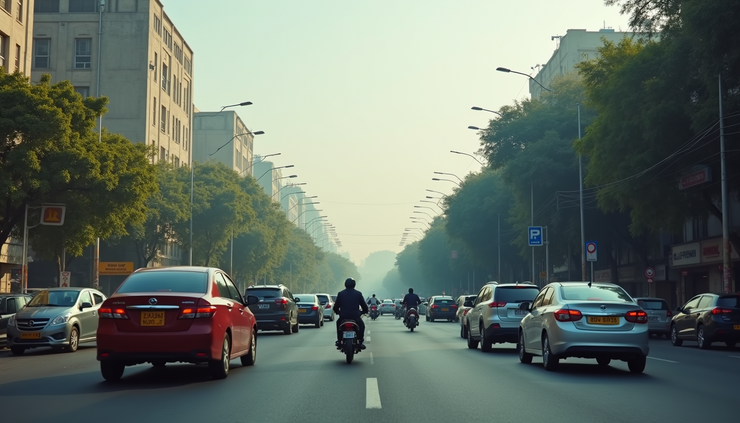
What GRAP Stage III Revocation Means for Delhi-NCR
The Graded Response Action Plan was designed as a tiered system to combat Delhi’s notorious air pollution spikes. Stage III, the most restrictive phase, included bans on older petrol and diesel vehicles and halted construction to reduce dust and emissions. The recent GRAP Stage III revocation lifts these restrictions, signaling an improvement in air quality.
Key changes after the revocation:
Lifting of the Delhi BS4 diesel ban update: BS-IV diesel vehicles can now operate freely.
Construction projects can resume without interruption.
Traffic restrictions on older vehicles are eased.
For daily commuters, this means less hassle with vehicle restrictions and smoother travel. For urban real estate stakeholders, construction delays are no longer a concern, potentially speeding up project timelines.
The Science Behind GRAP’s Effectiveness
Critics often question whether GRAP is more political than practical. But recent research from IITM-Pune offers strong evidence that GRAP works. Their data shows that without these "mini-lockdowns," Delhi would have experienced 60% more hours of "Severe" air quality.
This means:
Effective pollution control strategies like vehicle bans and construction halts directly reduce harmful emissions.
The AQI improvements are measurable and significant.
GRAP acts as a protective measure for public health, especially for vulnerable groups like children and the elderly.
While the AQI is still in the "Poor" category, this is a step up from the usual "Very Poor" or "Severe" levels seen in winter months.
The Political Angle: Reality or Rhetoric?
The timing of GRAP Stage III revocation often sparks debate. Some accuse authorities of using pollution control rules as political tools, especially when bans coincide with election cycles or inter-state tensions.
Here’s what to consider:
The CAQM air pollution rules are triggered by real-time AQI data, not political calendars.
States sometimes blame each other for pollution spikes, which fuels political rhetoric.
The revocation can appear as a political move, but the underlying mechanism is data-driven.
In short, while politics may influence the narrative, the core of GRAP remains a science-based response to air quality.

The Downsides of GRAP and Its Revocation
No policy is without trade-offs. The GRAP Stage III restrictions caused:
Interrupted livelihoods for construction workers and related industries.
Commuter frustration due to vehicle bans and traffic diversions.
Economic slowdowns in sectors dependent on construction and transport.
The revocation eases these pains but risks a potential rise in pollution if people and industries revert to old habits.
The challenge is to maintain air quality gains without strict government mandates. This requires:
Public cooperation in pollution control.
Adoption of cleaner technologies.
Continuous monitoring and timely action.
Looking Ahead: Delhi AQI Forecast 2026 and Beyond
The air quality outlook for Delhi in 2026 depends on how well the city balances economic activity and pollution control. The GRAP Stage III revocation is a test of this balance.
Key points to watch:
Will pollution levels rise again without strict bans?
Can effective pollution control strategies be sustained voluntarily?
How will the Delhi BS4 diesel ban update affect emissions long term?
The CAQM continues to monitor the situation closely, ready to reinstate measures if AQI worsens.

What This Means for You
For daily commuters, the GRAP Stage III revocation means fewer restrictions but a reminder to stay mindful of pollution. Using public transport, carpooling, or switching to cleaner vehicles can help keep the air breathable.
Environmental policy students can study this as a live example of how data-driven policies interact with politics and public behavior.
Urban real estate stakeholders should see this as a chance to push for sustainable construction practices that minimize pollution even without bans.


Comments